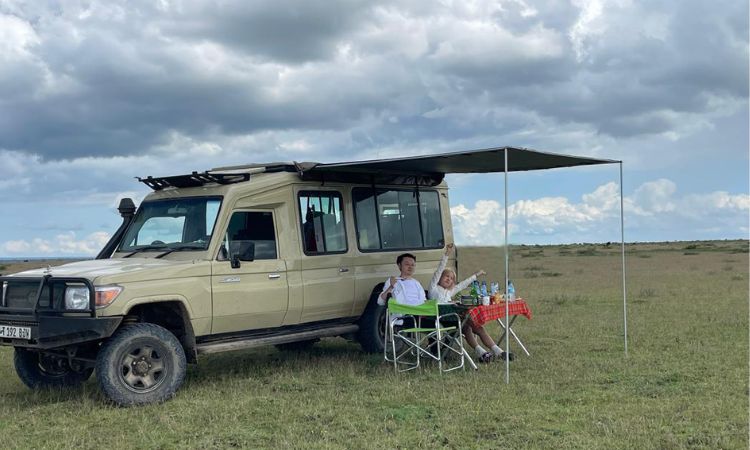
2025 Best Guide to Kenya Self Drive Safari Things to Do
Kenya Self Drive Safari Things to Do: Explore the top Kenya Self Drive Safari Things to Do, from wildlife viewing in national parks to exploring scenic white sand beaches, local cultures, and hidden gems off the beaten path.
With over 20 national parks, Kenya offers a variety of things to do to adventure seekers ranging from thrilling game drives, nature walks, birding, cultural encounters, and beach relaxations, among others ensuring the best African safari experience.
Kenya stands out as a premier wildlife destination in East Africa, offering thrilling encounters and a self-drive safari is one of the most exhilarating ways to explore all that this beautiful country has to offer.
From the wildebeest-filled plains of the Masai Mara to the stunning, flamingo-lined shores of Lake Nakuru, every self-drive journey in Kenya promises unforgettable wildlife experiences.
Unlike Kenya-guided tours that often come with fixed schedules, a self-drive safari offers unparalleled flexibility, allowing you to go all about your destinations at your own pace ensuring an immersive experience.
The roads leading to most of Kenya’s tourist destinations such as national parks, are a mix of well-maintained highways and rugged off-road trails, making them ideal for adventurous travelers confident in their driving skills.
Although we are talking about Kenya self-drive safaris as being one of the best ways to have yourself fully immersed in what the country has to offer, they require careful planning and consideration for a seamless and enjoyable experience.
With proper preparation, self-drive safaris are not only safe but also cost-effective, often saving up to about thirty percent compared to guided tours.
Kenya Self Drive Safari Things to Do: Experiences Tailored to Self-Drive Tourists
Wildlife Viewing:
Kenya National Parks featuring diverse wildlife is a paradise to wildlife enthusiasts and a self-drive game drive safari is one the best options to explore the diverse natural habitats of these parks, allowing you to spot animals under your own terms, enhancing the experience.
Maasai Mara National Reserve offers one of the best game drives in Kenya attracting wildlife enthusiasts from different parts of the world especially during the wildebeest migration months, often ranging from July to October.
A Masai Mara Game drive safari during these months offers you an exceptional opportunity to witness this natural phenomenon, where over 1.5 million wildebeests accompanied by thousands of zebras and other wild animals, including the majesty lions, cross the vast Mara plains to the neighboring National parks.
A full-day game self-drive adventure allows you to explore the vast 1, 510 km² of this Reserve at your pace, Seeking out the Big Five or any other animals of your choice.
We advise you to hire a local Maasai guide, often costing between $20-$25 for an immersive experience. These are found at the park’s main entrances and are well-versed with the park’s road networks and specific animal habitats, boosting your sightings.
Amboseli National Park is another top Kenya Safari destination offering nature enthusiasts close encounters with massive elephant herds against the backdrop of Mount Kilimanjaro.
Tsavo East and West feature vast landscapes teeming red dusted elephants and other animals ensuring an enjoyable self-game drive safari experience.
Nairobi National Park, just a few kilometers, like 7 km from the capital, offers beautiful day trips featuring views of incredible animals such as the black rhinos and lions against the city’s skyline.
Beach Visits:
After the thrilling game drive wildlife experiences, you go ahead and unwind on Kenya’s stunning white sand, blue crystalline water beaches.
Some of the popular options include the Diani beach, which is an ideal spot for kite surfing and relaxation. As a self-driver, you can take the scenic gravel road south of Mombasa to avoid crowded ferries, arriving at laid-back beach campsites like Diani Backpackers.
Watamu and Malindi, further north, offer marine parks for snorkeling and diving among coral reefs, with historical sites like the Gedi Ruins nearby.
These coastal destinations are easily accessible via the B8 highway, making them perfect for combining bush and beach adventures. Park your 4×4 at a beachfront campsite and soak in the coastal vibe.
Cultural Experiences:
A self drive safari in Kenya isn’t just about wildlife, It is a so a chance to connect with Kenya’s vibrant cultures. It takes you to visit the popular Maasai villages near the Masai Mara Reserve or Ambseli.
A cultural encounter in these villages costs about USD 20 to USD 30 per person for foreign non-residents. Led by an experienced local guide, you get an exceptional opportunity to learn about their pastoral life, witness or engage in their traditional dances, and purchase handcrafted beadwork among others.
A cultural encounter in Samburu National Reserve takes you to the Samburu people, known for their colorful attires and camel herding traditions.
Near Nairobi, you find the Bomas Cultural Center offering tribal dances, and the Nairobi National Museum showcasing Kenya’s history and art.
A Kenya self-drive safari offers you ample time to linger at all these cultural stops, fostering meaningful interactions.
To respect their customs, ensure to dress modestly during your visit and always ask for permission before photographing them.
Other Kenya Self Drive Safari Things to Do
Here are other Kenya self drive safari things to do beyond beaches, wildlife viewing, and cultural experiences:
-
Mountain Hiking & Trekking – Here, you can chose to conquer Mount Kenya or hike in the Aberdare Ranges.
-
Photography Expeditions – Carry a good digital camera to capture landscapes, sunsets, and rare wildlife sightings.
-
Camping in the Wild – Ideal for families and friends. Set up at designated campsites inside national parks and conservancies.
-
Cycling Safaris – With your bikes, you can explore areas like Hell’s Gate National Park on two wheels.
-
Boat Rides & Lake Excursions – Park your car and catch a boat to njoy Lake Naivasha or Lake Baringo for hippo and bird spotting.
-
Cave Exploration – Visit Kitum Cave in Mount Elgon National Park.
-
Zip-lining & Adventure Parks – Try adrenaline activities in Kereita Forest or Ngong Hills area.
-
Food & Coffee Trails – Visit Kenyan coffee plantations and local food markets.
-
Rock Climbing – Scale cliffs at Hell’s Gate or Mount Longonot.
-
Star Gazing – Camp in remote conservancies for breathtaking night skies.
Ideal Vehicle Types for Different Terrains
Choosing the right vehicle is critical for a safe and comfortable self-drive safari, as Kenya’s terrains vary widely across regions.
Masai Mara National Reserve: The Mara features a diverse of terrains ranging from well-paved marked trails to rough, dirty unmarked tracks and river crossings hence demanding a robust 4×4 wheel drive with high ground clearance, such as a Toyota Hilux and Land Cruiser 70 series.
These vehicles often come equipped with a popup roof offering uninterrupted game views, and their reinforced suspension handles the muddy trails and steep inclines with ease.
Tsavo East and West National Parks: Tsavo is a vast savannah park featuring semi-arid landscapes hence requiring a sturdy, fuel-efficient 4×4 car with long-range tanks such as the Land Cruiser Prado and the Land Rover Defender.
These two vehicles manage gravel roads and occasional sandy paths with much ease compared to other vehicles. Ensure to carry a spare tire and a jack for emergencies. Expect to pay $110–$150/day for a fully equipped model.
Coastal Regions (Diani, Watamu, Malindi): The smoother B8 coastal highway and gravel roads to beaches are navigable with a standard 4×4 like a Toyota RAV4 or Nissan X-Trail, though a Land Cruiser is preferable for detours to remote sites like Shimba Hills. Rooftop tents are ideal for beach camping, costing $80–$120/day.
Opt for a 4×4 with a pop-up roof, GPS, two spare tires, and full insurance from reputable companies like Car Hire Kenya.
Recommended Driving Routes and Sightseeing Stops
Route 1: Nairobi to Masai Mara via Nakuru
This is a 600-kilometer road trip covered in 7 days hence requiring a sturdy 4×4 car for a seamless, enjoyable and immersive experience. Below is its simple itinerary;
- Day 1–2: Nairobi to Lake Nakuru (160 km, 3–4 hours): Start in Nairobi, visiting the David Sheldrick Wildlife Trust ($15 entry) for baby elephants. Drive the A104 to Lake Nakuru National Park for flamingo and rhino sightings. Camp at Naiburta Campsite coosting $30/night with hilltop views.
- Day 3–5: Nakuru to Masai Mara (230 km, 5–6 hours): Head to Masai Mara via Narok (C12). Explore the reserve’s Big Five and migration if you happen to visit between the months of July and October. Stop at the Mara River for wildebeest crossings and visit a Maasai village. Camp at Sand River csting $30 per night.
- Day 6–7: Masai Mara to Nairobi, a 270 km distance covered in about 5–6 hours by car: Return via Narok, stopping at Lake Naivasha for a walking safari on Crescent Island. This costs USD 30.
Route 2: Nairobi to Amboseli and Tsavo (5 Days, 500 km)
This is a 500 km road trip covered in about 5 Days. Its itinerary is as follows;
- Day 1–2: Nairobi to Amboseli (240 km, 4–5 hours): Drive the A109 to Amboseli for elephant herds and Kilimanjaro views. Stop at Observation Hill for panoramas. Camp at Kimana Sanctuary, USD 25/night.
- Day 3–4: Amboseli to Tsavo West (150 km, 3 hours): Explore Tsavo West’s Mzima Springs and rhino sanctuary. Visit the Shetani Lava Flows. Camp at Kudu Campsite ($30/night).
- Day 5: Tsavo West to Nairobi (230 km, 4–5 hours): Return via the A109, stopping at Nairobi National Museum costing $12 per individual entry.
Route 3: Nairobi to Diani Beach via Tsavo East (6 Days, 700 km)
- Day 1–2: Nairobi to Tsavo East (330 km, 5–6 hours): Drive the A109 to Tsavo East for red elephants and the Galena River. Stop at Lugard Falls. Camp at Voi Campsite costing about $25/night.
- Day 3–5: Tsavo East to Diani Beach (300 km, 5 hours): Take the C103 to Diani Beach, avoiding the Mombasa ferry via the southern gravel road. Relax at Diani Beach or snorkel in Wasini Marine Park costing USD 40 per person. Camp at Diani Backpackers ($20/night).
- Day 6: Diani to Nairobi (500 km, 8–9 hours): Return via Mombasa, stopping at Shimba Hills for sable antelope ($26 entry).
Unique places to visit in kenya while on a self drive safari
Local Driving Rules and Tips
Driving Rules: Kenya follows left-hand driving with speed limits of 50 km/h in towns and 100 km/h on highways. Seatbelts are mandatory, and police checkpoints are common.
Therefore, you need to carry your International Driving Permit (IDP) and passport with you all the time. Night driving in parks is prohibited for safety.
Tips:
- Avoid Night Driving as roads lack lighting, and people, wildlife or livestock may cross unexpectedly leading to a car crash. Plan to arrive at campsites by dusk.
- Use Offline Maps: Download reliable apps like maps.me for unmarked park trails. You can also consider carrying a physical map as a backup as remote areas have a poor network connection.
- Fuel Planning: Fill up in major towns such as Nairobi, Nakuru, and Mombasa as park fuel stations are scarce in remote areas. Carry extra fuel in a jerry can for long distances such as that of Tsavo.
- Cultural Sensitivity: Ensure to dress modestly when visiting the rural areas and worshipping centers like mosques and churches. You can also learn basic Swahili greetings such as Jambo for an engaging experience with the locals. Lastly, avoid offering lifts to strangers.
Permits and Fees for Each Experience
- Masai Mara National Reserve: $70–$80/day per person (12-hour ticket), $800 KES ($6) vehicle fee. Camping fees: $30/night at public sites like Sand River. Cashless payments (Mpesa, card) preferred.
- Amboseli National Park: $60/day per person, $300 KES ($2.50) vehicle fee. Camping: $25/night at Kimana.
- Tsavo East/West National Parks: $52/day per person, $300 KES vehicle fee. Camping: $25–$30/night at Kudu or Voi.
- Nairobi National Park: $46/day per person, $300 KES vehicle fee. No camping; day trips only.
- Lake Nakuru National Park: $60/day per person, $300 KES vehicle fee. Camping: $30/night at Naiburta.
- Coastal Activities: Diani Beach and Watamu have no entry fees, but marine parks like Wasini cost $40 for snorkeling. Shimba Hills: $26/day per person.
- Cultural Visits: Maasai village visits cost $20–$30 per person. Nairobi National Museum: $12. Bomas of Kenya: $10. Book permits in advance via Kenya Wildlife Service (KWS) eCitizen platform to avoid queues.
Below is a summarized table for the above costs;
| Attraction / Activity | Entry Fee (Per Person/Day) | Vehicle Fee | Camping Fee (Per Night) | Notes |
| Masai Mara National Reserve | $70–$80 (12-hour ticket) | KES 800 ($6) | $30 (public sites like Sand River) | Cashless payments (Mpesa/card) preferred |
| Amboseli National Park | $60 | KES 300 ($2.50) | $25 (Kimana) | Book via KWS eCitizen |
| Tsavo East/West National Parks | $52 | KES 300 ($2.50) | $25–$30 (Kudu or Voi) | Cashless payments preferred |
| Nairobi National Park | $46 | KES 300 ($2.50) | Not available | Day trips only |
| Lake Nakuru National Park | $60 | KES 300 ($2.50) | $30 (Naiburta) | |
| Diani Beach & Watamu | No entry fee | N/A | N/A | Free public beach access |
| Wasini Marine Park (Snorkeling) | $40 | N/A | N/A | Part of coastal activities |
| Shimba Hills | $26 | N/A | N/A | Forest reserve with hiking and wildlife |
| Maasai Village Visits | $20–$30 | N/A | N/A | Cultural experience |
| Nairobi National Museum | $12 | N/A | N/A | Cultural and historical exhibits |
| Bomas of Kenya | $10 | N/A | N/A | Traditional dance and cultural displays |

Vehicle Safety Tips for Kenyan Roads and Wildlife Encounters
Vehicle Preparation:
- First, you have to ensure that Rent a car from a reputable company, like us, offering well-maintained and serviced cars. Your car should come with a spare tire, a jack, and a tow strap to handle expected breakdowns.
- Carry a first-aid kit, extra water, snacks, and a charged phone with a local SIM for emergencies.
- Test your car’s suspension and fuel efficiency, as shocks can wear on washboard roads
Road Safety:
- Drive slowly with your maximum speed being at 50 km/h in parks to ensure your safety and that of thers using the same road. Watch out for speed bumps, especially on rads passing through urban centers and settlement areas.
- Avoid off-road driving especially in national parks as it comes with big fines. Always Stick to tour designated tracks.
- Practice patience if planning to drive through busy cities featuring heavy traffic like Nairobi.
Wildlife Encounters:
- You are required to maintain a safe distance of at least 20 meters from animals like elephants or buffalo. Avoid getting out of your car unless permitted by a professional park guide. If an elephant approaches, keep the engine running, stay calm, and reverse slowly.
- Be aware of animal crssing, and stp and wait for them to cross as hitting only one of them results in serious fines of up to USD 500.
- At campsites, secure food to deter baboons and hyenas. Elevate rooftop tents for safety.
Emergency Preparedness:
- Save KWS emergency numbers, +254 20 2379407, and local mechanic contacts to avoid getting stranded in the middle of nowhere.
- Carry cash for police checkpoints, as minor bribes, between $5–$10 may be requested, though reputable operators can help negotiate.