What Animals Are in Kibale National Park? Top Wildlife Guide
Kibale National Park, nestled in western Uganda, is a biodiversity hotspot renowned as the primate capital of East Africa.
This tropical rainforest haven is home to over 70 mammal species, including an impressive array of primates, elusive forest elephants, and vibrant birdlife.
At the forefront of its attractions are the habituated chimpanzees, drawing adventure seekers from around the globe for unforgettable trekking experiences.
Overview of Kibale National Park
Kibale National Park spans approximately 766 square kilometers in western Uganda, bordering the districts of Kabarole and Kamwenge. Established in 1993, it protects a lush tropical rainforest ecosystem that transitions between lowland and montane forests, creating ideal habitats for diverse flora and fauna.
The park’s altitude ranges from 1,100 to 1,590 meters, supporting a mix of evergreen trees, swamps, and grasslands that foster exceptional biodiversity.
What makes Kibale’s wildlife so rich? Its location in the Albertine Rift Valley, a biodiversity corridor, allows for a unique blend of Central African and East African species.
Dense vegetation provides ample food sources like fruits, leaves, and insects, while rivers and wetlands add to the habitat variety.
For tour operators, Kibale offers year-round accessibility via Fort Portal, making it a seamless addition to gorilla trekking itineraries in nearby Bwindi Impenetrable National Park.
This contextual depth not only enhances your travel blog content but also positions Kibale as a gateway to Uganda’s untamed wilderness.

What Animals Are in Kibale National Park?
Primates in Kibale National Park
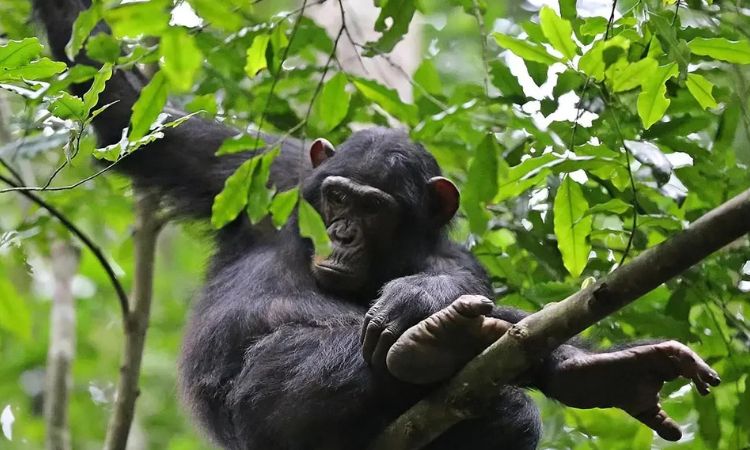
No discussion of animals in Kibale National Park is complete without highlighting its primates – over 13 species thrive here, making it one of Africa’s premier primate destinations. Chimpanzees (Pan troglodytes) steal the show, with an estimated 1,500 individuals, the largest population in Uganda.
Habituation programs allow visitors to observe these intelligent apes in their natural habitat, swinging through canopies or foraging on the forest floor.
Other standout primates include the endangered red colobus monkeys (Piliocolobus tephrosceles), often seen in large troops, and the striking black-and-white colobus (Colobus guereza), known for their acrobatic leaps.
Don’t miss the L’Hoest’s monkey (Allochrocebus lhoesti), a rare Albertine Rift endemic with a distinctive white beard, or the grey-cheeked mangabey (Lophocebus ugandae), Uganda’s only endemic primate.
Olive baboons (Papio anubis), red-tailed monkeys (Cercopithecus ascanius), blue monkeys (Cercopithecus mitis), and vervet monkeys (Chlorocebus pygerythrus) add to the chorus of calls echoing through the trees.
Nocturnal species like bush babies (Galagoides spp., including Demidoff’s and Thomas’s dwarf galagos) and pottos (Perodicticus potto) emerge after dark, offering unique night walk opportunities for tour groups.
Mammals in Kibale National Park
Beyond primates, Kibale hosts a variety of mammals that add depth to any safari itinerary. Forest elephants (Loxodonta cyclotis), smaller than their savanna cousins, roam the undergrowth but are often elusive due to dense vegetation – spotting their tracks or dung is a thrill for guided walks.
African buffaloes (Syncerus caffer) graze in open clearings, while bush pigs (Potamochoerus larvatus) and giant forest hogs (Hylochoerus meinertzhageni) root through the soil.
Antelopes like the blue duiker (Philantomba monticola), red duiker (Cephalophus natalensis), yellow-backed duiker (Cephalophus silvicultor), and Peter’s duiker (Cephalophus callipygus) dart through the forest, evading predators. The semi-aquatic sitatunga (Tragelaphus spekii) frequents swampy areas, and bushbucks (Tragelaphus scriptus) are common near trails.
Carnivores are rarer: leopards (Panthera pardus) prowl nocturnally, and the African golden cat (Caracal aurata) is a seldom-seen gem.
Note that large predators like lions are not resident here, as Kibale’s forest ecosystem differs from open savannas. For tour operators, bundle mammal sightings with chimp treks to create multi-day packages that highlight Kibale’s hidden gems.
Bird Species in Kibale National Park
Birdwatchers flock to Kibale for its avian diversity, with over 375 recorded species, including forest specialists and Albertine Rift endemics. The great blue turaco (Corythaeola cristata), with its vibrant plumage, is a highlight, often spotted in canopy flocks.
The elusive green-breasted pitta (Pitta reichenowi) calls from the understory, drawing dedicated birders on specialized tours.
Other notables include the black-and-white casqued hornbill (Bycanistes subcylindricus), African grey parrot (Psittacus erithacus), red-headed bluebill (Spermophaga ruficapilla), and red-bellied paradise flycatcher (Terpsiphone rufiventer).
Endemics like the dusky crimsonwing (Cryptospiza jacksoni), red-faced woodland warbler (Phylloscopus laetus), and collared apalis (Oreolais ruwenzorii) underscore Kibale’s conservation value.
Unique to Uganda’s parks are the Cassin’s spinetail (Neafrapus cassini), blue-headed bee-eater (Merops muelleri), Nahan’s francolin (Pternistis nahani), and masked apalis (Apalis binotata).
Travel blogs can promote birding safaris from Bigodi Wetland, where wetland species add variety. With expert guides, even novices can tick off 100+ species in a day.
Reptiles & Amphibians
Kibale’s underappreciated herpetofauna includes around 101 species of reptiles and amphibians, contributing to its ecological richness. Reptiles feature colorful chameleons like the flap-necked chameleon (Chamaeleo dilepis) and Uganda blue-headed tree agama (Acanthocercus ugandaensis), often seen basking on branches.
Forest snakes, such as the Gabon viper (Bitis gabonica) and forest cobra (Naja melanoleuca), are venomous but shy, rarely encountered on trails.
Amphibians thrive in the moist environment, with frogs like the Senegal running frog (Kassina senegalensis), Kivu reed frog (Hyperolius kivuensis), and common reed frog (Hyperolius viridiflavus) croaking in choruses after rain.
Toads and tree frogs add to the symphony. For tour operators, incorporate herp-focused night walks to showcase these creatures, appealing to niche eco-tourists and enhancing blog content on Kibale’s lesser-known wildlife.
Nocturnal Animals in Kibale
Kibale comes alive at night with creatures rarely seen during daylight hours. Bush babies and pottos, mentioned earlier, leap through the trees, their large eyes glowing under torchlight. Nightjars (Caprimulgus spp.) and owls, like the African wood owl (Strix woodfordii), hunt insects and small prey.
Other nocturnal mammals include civets (Civettictis civetta) and genets (Genetta spp.), stealthy predators. For unique experiences, recommend guided night walks from lodges like Primate Lodge.

Best Places to See Animals in Kibale
Prime spots include the Kanyanchu Visitor Centre, starting point for chimp treks where primates abound. Bigodi Wetland Sanctuary, adjacent to the park, offers boardwalk trails for birds, monkeys, and sitatungas. Forest trails like the Chimpanzee Trail yield mammal sightings, while swamp edges host amphibians and reptiles.
Best Time to See Wildlife in Kibale
Dry seasons (December-February, June-September) offer easier trails and higher chimp trekking success (up to 90%). Wet seasons (March-May, October-November) boost birding with migrants. Year-round visibility is good, but pack rain gear.
Wildlife Viewing Activities
Top activities: Chimpanzee trekking (4-hour hikes), habituation experiences (full-day immersion), nature walks, birdwatching, and night walks.
FAQs about What Animals Are in Kibale National Park
What animals can you see in Kibale National Park?
Over 70 mammals, 375 birds, and diverse reptiles/amphibians, led by chimpanzees.
Are there lions in Kibale?
No, Kibale lacks resident lions; it’s a forest park.
Is Kibale good for safaris?
Yes, especially primate and bird safaris.
How many primates are in Kibale?
13+ species.
Can you see elephants in Kibale?
Yes, forest elephants, though elusive.
Conclusion
Kibale National Park’s uniqueness lies in its primate diversity and lush ecosystems – a paradise for wildlife lovers. Embrace responsible tourism to preserve it. Contact us for tailored tours and make your Kibale adventure unforgettable.