
Is it Safe to Rent a Car in Uganda: Top Car Rental Guide 2026
Is it Safe to Rent a Car in Uganda? Is self-driving in Uganda a good idea? The honest answer to both is yes provided you’re an experienced, well-prepared driver working with a reputable rental company.
Uganda offers some of the most rewarding road trip routes in East Africa, connecting Bwindi’s gorilla forests, Murchison Falls’ savanna, and Queen Elizabeth’s game-viewing circuits by car. But it comes with genuinely higher risks and more demanding conditions than driving in Europe or North America.
This guide covers everything you need to know: road conditions, traffic laws, vehicle choice, safety tips, and exactly how to evaluate whether a car rental company is trustworthy before you hand over payment.
Uganda Road Conditions and Infrastructure
Uganda’s major highways including Kampala to Entebbe, Jinja, Mbarara, Masaka, Gulu, and Masindi are generally well-paved, well-signposted asphalt roads, easy to navigate with regular traffic checkpoints ensuring drivers follow the rules. Most roads within major cities and towns like Entebbe, Jinja, Masaka, Mbarara, and Kampala are similarly well-maintained.
The picture changes once you leave these main routes. Roads leading to Uganda’s national parks, Bwindi, Kibale, Murchison Falls, and more often include sections of potholes, corrugation, dust, or mud, particularly during the rainy seasons, March–May and September–November.
During these months, remote roads can flood, turn slippery, and become genuinely difficult to navigate. Rural and park-access roads frequently require a sturdy 4×4 with high ground clearance rather than a standard sedan.
Navigation apps like Google Maps don’t always reflect current road conditions accurately on minor routes, and fuel stations are reliable along main highways and become genuinely scarce in remote areas, so planning fuel stops in advance matters more here than in most destinations.
Uganda Traffic Laws and Recent Updates
Uganda’s traffic laws are governed by the Traffic and Road Safety Act, Cap. 361, and while enforcement faces real challenges, the regulations themselves are worth knowing before you drive.
Speed limits (updated 2024): 30 km/h in urban high-traffic zones like schools, markets, and cities such as Kampala (reduced from 50 km/h); 100 km/h on expressways; 90 km/h for cars on paved highways; 60 km/h for motorcycles; 30–60 km/h on gravel roads depending on vehicle type. Within national parks, expect lower limits still typically 30–40 km/h.
Speeding penalties range from UGX 200,000 (~$55) for exceeding limits by 1–30 km/h, up to UGX 600,000 (~$165) for anything beyond that. Uganda’s Express Penalty Scheme (EPS) requires payment within 72 hours, with a 50% surcharge applied for late payment.
Licensing requirements: Foreigners can drive using a valid home country license (in English, or with a notarized translation) for up to 90 days, or an International Driving Permit — while not strictly required in most cases, carrying an IDP alongside your home license is genuinely advisable.
The minimum driving age is 18, though car rental companies typically require drivers to be 23 or older with at least two years of driving experience.
Vehicle requirements: All vehicles must be registered with the Uganda Revenue Authority (URA) with valid plates displayed, and rental cars should carry third-party insurance at minimum.
Vehicles must remain roadworthy — functional brakes, lights, and tires — with unroadworthy vehicles facing fines or impoundment.
Key violations: Drunk driving is illegal with a blood alcohol limit of 0.08% (a proposed reduction to 0.05% for general drivers, 0.02% for novices, and 0.00% for commercial drivers is under discussion), carrying fines of UGX 300,000–2,000,000 (~$80–$550) or up to three years imprisonment.
Texting while driving is prohibited, with fines up to UGX 2,000,000 (~$550) or one year imprisonment. Seatbelts are mandatory for drivers, passengers, and motorcyclists, with non-compliance fines of UGX 100,000–300,000 (~$27–$80).

Driving Culture and Common Hazards
Ugandan roads are known for aggressive driving, frequent overtaking, and speeding. Boda-bodas (motorcycle taxis) are everywhere and weave unpredictably through traffic, contributing to a genuinely high share of road accidents. Pedestrians, cyclists, and animals frequently share the road, particularly in rural areas.
Key risks worth knowing before you drive: Uganda has one of the highest road fatality rates in East Africa, with speeding and drink-driving the leading causes.
Overloaded trucks and buses are common and often poorly maintained. Street lighting is limited outside major towns, making night driving genuinely more dangerous.
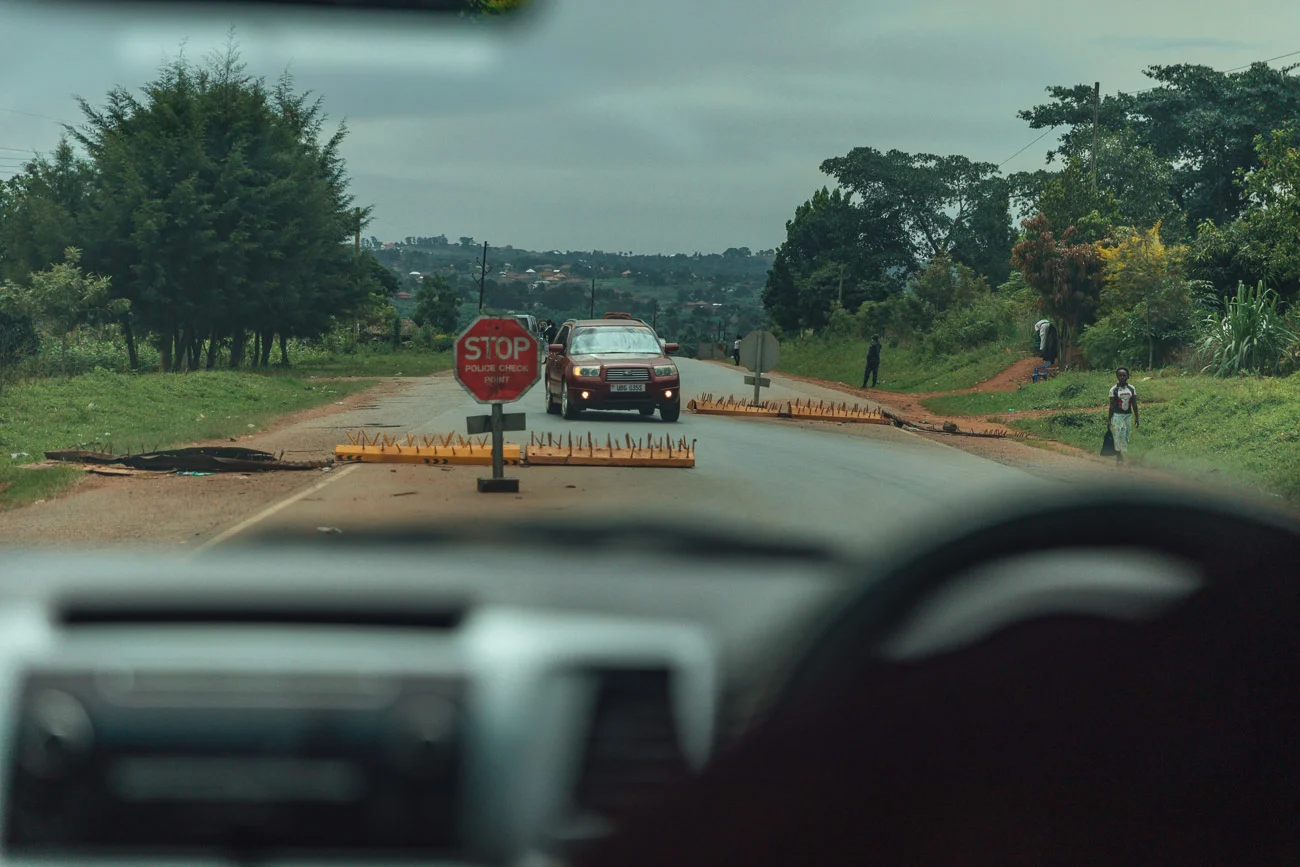
Police checkpoints are frequent and we advise you to always stop when signaled. Driving is on the left-hand side, which takes real adjustment for travelers used to right-hand driving.
Requirements for Self-Driving in Uganda
Before you get behind the wheel, make sure you have: a valid driver’s license (foreigners can typically drive on a home country license, though carrying an International Driving Permit is advisable); you meet the minimum age requirement (usually 21–24 for rentals, with some companies requiring 25+); a reliable 4×4 rented from a reputable, fully insured company; comprehensive insurance including third-party liability; and your passport, vehicle registration, and insurance papers carried with you at all times.
Choosing the Right Vehicle for Uganda’s Roads
Vehicle choice should follow your actual itinerary. If your trip stays largely within major cities or well-paved highway routes, a sedan or compact car is a perfectly reasonable, more economical choice — our guide on the Toyota RAV4 covers exactly this kind of lighter, budget-friendly self-drive option.
If you’re heading into national parks or traveling during the rainy season, a genuine 4×4 is strongly recommended. Popular choices in Uganda include the Toyota RAV4 (for lighter off-roading), the Toyota Land Cruiser TX/V8/Prado, the Land Cruiser Hardtop 70 Series, the Safari Land Cruiser Extended 7-seater, and Safari Vans — all known for strong off-road capability without sacrificing comfort.
Our detailed guide to the Toyota Land Cruiser TX and our broader breakdown of choosing the best car for Ugandan roads cover exactly which vehicle suits which route.
For genuinely remote destinations like Kidepo Valley or Karamoja, a RAV4 becomes unsuitable — this is strictly Land Cruiser or Hardtop territory.
Our fuel consumption comparison across different rental vehicles is worth checking too, since fuel costs vary meaningfully between vehicle classes over a multi-day trip.
Is It Safe to Rent a Car in Uganda?
Yes — when you choose a reputable, registered rental company. Here’s exactly what to verify before booking:
Company registration. Confirm the rental company is properly registered — platforms like OpenCorporates can help verify this.
Genuine customer reviews. Check trusted platforms like TripAdvisor to gauge a company’s actual reliability, not just testimonials on their own website.
Authentic vehicle photos. A reputable company posts real photos of their actual fleet rather than stock images pulled from the internet — a simple but genuinely telling authenticity check.
Comprehensive insurance. Confirm the vehicle carries comprehensive coverage for potential damage, though remember that insurance typically won’t cover damage caused by reckless driving — safe driving remains your responsibility regardless of coverage.
Secure payment channels. Always pay into the company’s official business account, never a personal account — this single check prevents the majority of rental scams.
Vehicle inspection before departure. Even with a reputable company, take the time to inspect your vehicle before setting off, confirming everything required for your journey is present and in working order.
Essential Safety Tips for Driving in Uganda
Avoid night driving. Potholes, animals, and unlit vehicles make nighttime driving genuinely risky — plan to arrive at your destination before sunset wherever possible, and use high beams cautiously to avoid blinding oncoming traffic.
Drive defensively. Minibus and bus drivers frequently overtake recklessly — maintain a safe following distance, especially from heavy vehicles with long braking distances.
Maintain your vehicle proactively. Check tires, brakes, lights, and indicators before every trip. Carry a jack, wheel spanner, warning triangle, and a jerry can for extra fuel, since rural petrol stations are genuinely scarce.
Prepare for emergencies. Carry a first aid kit, water, snacks, a charged phone with a local SIM card, and emergency numbers, 999 for police, and 112 for medical — keeping in mind that response times can be slow outside major cities.
Handle police checkpoints correctly. Officers in white uniforms are common at checkpoints. Stay polite, carry your license, rental agreement, and insurance documents, and pay any fines via bank deposit rather than cash to avoid corruption.
Navigate Kampala’s congestion with patience. Signal early, keep windows up to prevent petty theft, and budget extra time for the city’s notorious traffic jams.
Watch for wildlife and pedestrians. This applies both inside national parks and along rural roads, particularly near schools or markets.
Time your trip to the season. The dry seasons, June to September and December to February are genuinely ideal for off-road adventures and game drives, offering firmer roads and easier driving conditions throughout.
Save your rental company’s emergency number and reach out to them first in the event of any incident, before taking independent action. For general emergencies, the Uganda Police toll-free line is 0800300115.

Top Destinations to Explore by Car in Uganda
Bwindi Impenetrable National Park, home to Uganda’s endangered mountain gorillas, is one of the country’s most sought-after destinations — access trails and internal park roads range from rocky and steep to genuinely flooded and slippery during rainy season, making a reliable 4×4 essential.
Murchison Falls National Park, home to the world’s most powerful waterfall by volume, offers spectacular guided game drives with strong sightings of lions, elephants, giraffes, and zebras.
Queen Elizabeth National Park, known for its diverse wildlife and the scenic Kazinga Channel, remains one of Uganda’s most-visited parks and a natural stop on any road-trip itinerary.
Lake Bunyonyi, often called the “Switzerland of Africa,” offers a stunning terraced-hill landscape and genuinely excellent birding among its many wading bird species — a strong relaxation stop between more active legs of a trip.
Kampala and Jinja, Uganda’s capital and its adventure hub respectively, round out a classic road trip — Kampala for vibrant markets, historical sites, and culture, and Jinja for its status as the source of the Nile, offering white-water rafting, canoeing, and fishing alongside the simple pleasure of standing where Africa’s longest river begins.
Pros and Cons of Self-Driving in Uganda
Advantages include genuine freedom and flexibility over your own itinerary, potentially lower costs than a fully guided tour, and a more immersive, hands-on connection with local communities and landscapes — particularly rewarding for repeat visitors already comfortable with African road conditions.
Drawbacks include higher stress and safety risk for inexperienced drivers, limited local knowledge around wildlife spotting, shortcuts, and cultural nuance that a professional guide would otherwise provide, and genuine logistical challenges if you encounter a breakdown or unfamiliar park regulations in a remote area. Self-driving generally isn’t recommended for first-time visitors to Africa or families traveling with young children.
Many travelers report genuinely positive self-drive experiences along the main tourist circuit, Kampala, Queen Elizabeth, Bwindi, Kibale — especially with a solid 4×4 and offline mapping tools like Maps.me.
Roads outside major towns, though, demand real respect and local knowledge, and forums consistently echo this same caution.
Essential Pre-Trip Preparations
Research your route thoroughly before departure — know your key stops for food, fuel, and accommodation, and understand road conditions along your specific route so you can plan realistically.
Pack essential supplies: extra fuel, a first aid kit, a tool kit, and a jack, particularly if venturing into remote areas without nearby fuel stations, mechanics, or health facilities.
Carry adequate food, water, and insect repellent for multi-day trips through forested regions. Confirm you have the necessary vaccinations, including yellow fever, well before travel, and take proactive measures against mosquitoes — nets and antimalarial medication — when spending nights in more remote wilderness areas.
If your itinerary crosses into Kenya, Tanzania, or Rwanda, inform your rental company in advance so they can arrange the necessary COMESA card for cross-border travel.
Fuel stations in rural areas often don’t accept cards, so carry sufficient Ugandan shillings for fuel and tolls. Many rural roads lack clear signage, so a reliable offline map — or a local guide familiar with the specific region — genuinely reduces risk.
Should You Self-Drive or Hire a Driver-Guide?
For travelers wanting a stress-free alternative without sacrificing flexibility, hiring a local driver-guide (from roughly $40/day) who knows the roads, wildlife, and cultural context remains the safer, more popular choice for most visitors — particularly first-timers.
A professional driver-guide handles navigation, wildlife interpretation, and trip logistics, letting you focus entirely on the experience rather than the road itself.
Our full car hire services guide covers both self-drive and chauffeur-driven options side by side, and our pricing guide for car hire in Uganda breaks down exactly how the cost compares across both approaches.
The Verdict: Is Driving in Uganda Safe?
Self-driving in Uganda can be a genuinely rewarding adventure for confident, well-prepared drivers who respect local road conditions and plan accordingly.
For most international visitors particularly on a first trip, opting for a professional guided safari significantly enhances safety, comfort, and overall enjoyment, while maximizing wildlife encounters along the way.
Renting a car in Uganda is itself safe and straightforward, provided you choose a registered, reviewed, insured rental company and follow standard precautions around payment and vehicle inspection.
Ready for a stress-free Uganda adventure? Join us at Car Hire Uganda. Our experienced drivers, comfortable safari vehicles, and expert guides handle everything from gorilla trekking in Bwindi to game drives in Queen Elizabeth and chimpanzee tracking in Kibale so you can fully immerse yourself in the beauty of the Pearl of Africa.
Whether you prefer a private guided tour or a fully self-drive itinerary, we prioritize your safety at every step. Learn more about Car Hire Uganda, or contact us today — and in case of any emergency during your rental, reach us directly at +256 777 906879.
FAQ: Driving and Car Rental Safety in Uganda
Is it safe for a first-time visitor to self-drive in Uganda? It’s possible but not generally recommended — most first-time visitors have a safer, more enjoyable experience with a professional driver-guide, especially on unfamiliar rural and park-access roads.
What’s the minimum age to rent a car in Uganda? Most companies require drivers to be at least 21–23, with some requiring 25 and a minimum of two years’ driving experience.
Do I need an International Driving Permit to drive in Uganda? Not strictly in most cases — a valid home country license in English (or notarized translation) is usually sufficient for up to 90 days — but carrying an IDP alongside it is genuinely advisable.
What vehicle should I rent for Uganda’s national parks? A 4×4 with high ground clearance — a Land Cruiser TX, Prado, V8, or Hardtop — is strongly recommended for park roads, while a RAV4 or sedan suffices for city and highway driving only.
How do I know if a Uganda car rental company is trustworthy? Verify their business registration, check independent reviews on platforms like TripAdvisor, confirm they use authentic photos of their actual fleet, and always pay into their official business account rather than a personal one.
What should I do in a driving emergency in Uganda? Contact your rental company’s emergency line first — for general emergencies, dial 999 for police or 112 for medical assistance, keeping in mind response times can be slower outside major cities.